










The God Who Answers: Devotional
From the series “What’s on Your Altar?”
Scripture
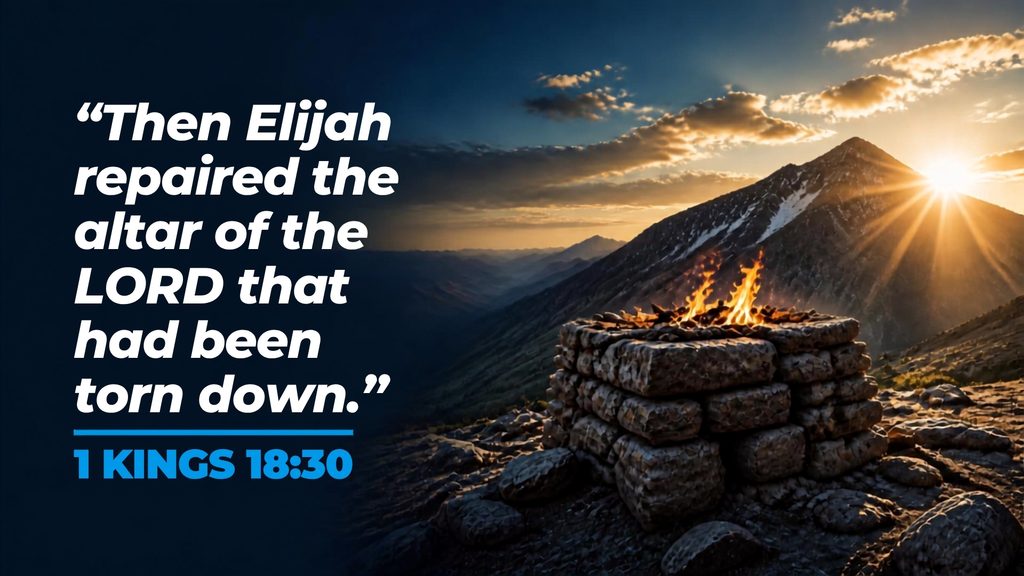
“Then Elijah called to the people, ‘Come over here!’ They all crowded around him as he repaired the altar of the Lord that had been torn down.” — 1 Kings 18:30
Reflection
Three and a half years. That’s how long the drought lasted. No rain. No dew. The rivers dried up. The grass withered. And the people — who had been worshipping Baal, the supposed god of storms — were forced to face the reality that their god couldn’t produce a single drop.
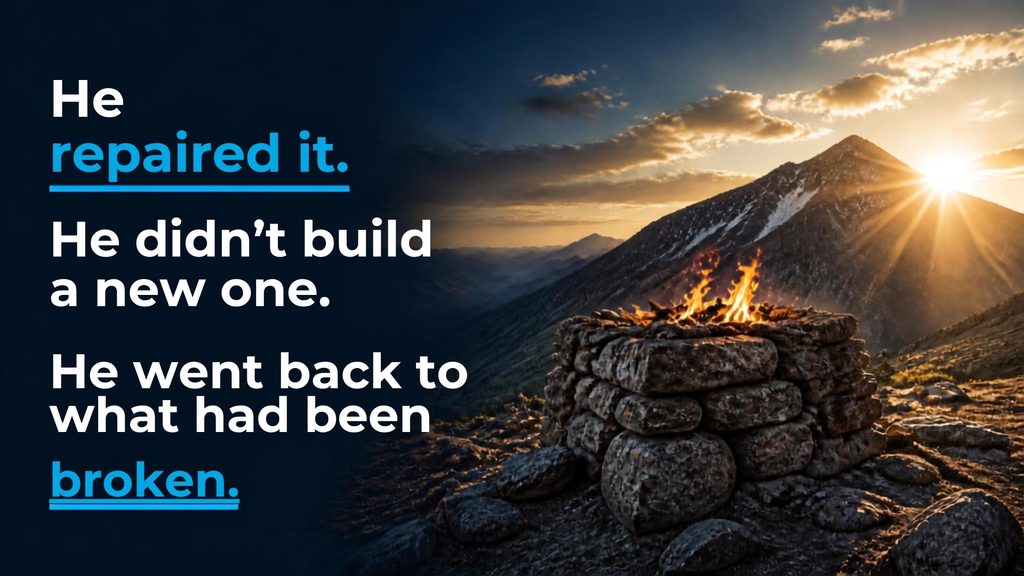
When Elijah finally showed up on Mount Carmel, the altar of the Lord had been torn down. Demolished. Dismantled under Ahab and Jezebel’s regime. But notice what Elijah did: he didn’t mourn it. He didn’t stand there cataloguing how far the nation had fallen. He repaired it.
That word — “repaired” — in Hebrew is rāp̄ā’ (H7495). It means to heal. It’s the same word God uses when He says, “I am the Lord who heals you” (Exodus 15:26). It’s the word for binding up the brokenhearted (Psalm 147:3). Elijah didn’t construct something new. He healed what had been broken.
Some of you know exactly what a torn-down altar feels like. Not because of some dramatic rebellion — but because of neglect. Slow erosion. A hundred small decisions that moved you one degree at a time from the place where you used to meet with God. The prayer life that used to burn hot went cold. The worship that used to be real became routine. The surrender that used to be your daily posture… you picked everything back up off the altar and walked away.
But here’s what I love: God still recognized the original design. Elijah used twelve stones — not ten, not two — twelve. Two hundred years of division, golden calves, and Baal temples, and God’s covenant was still intact. The corruption didn’t erase the promise.
And then Elijah poured water over everything. In a drought. Twelve jars. Three times. He was saying, “God, we trust You with what matters most.” That’s not recklessness — that’s worship.
The prophets of Baal screamed louder, danced harder, cut themselves deeper — trying to force a response from their god. Elijah simply placed everything on the altar and stepped back. The counterfeit altar is about what you can get God to do. The true altar is about what you’re willing to give.
And then he prayed one of the most powerful prayers in Scripture: “O Lord, answer me! Answer me so these people will know that you, O Lord, are God and that you have brought them back to yourself.”
That word — “brought them back” — is shub (H7725). Repentance. Return. Coming home. That’s what the fire was for. Not spectacle. Not entertainment. Shub — hearts turning back to God.
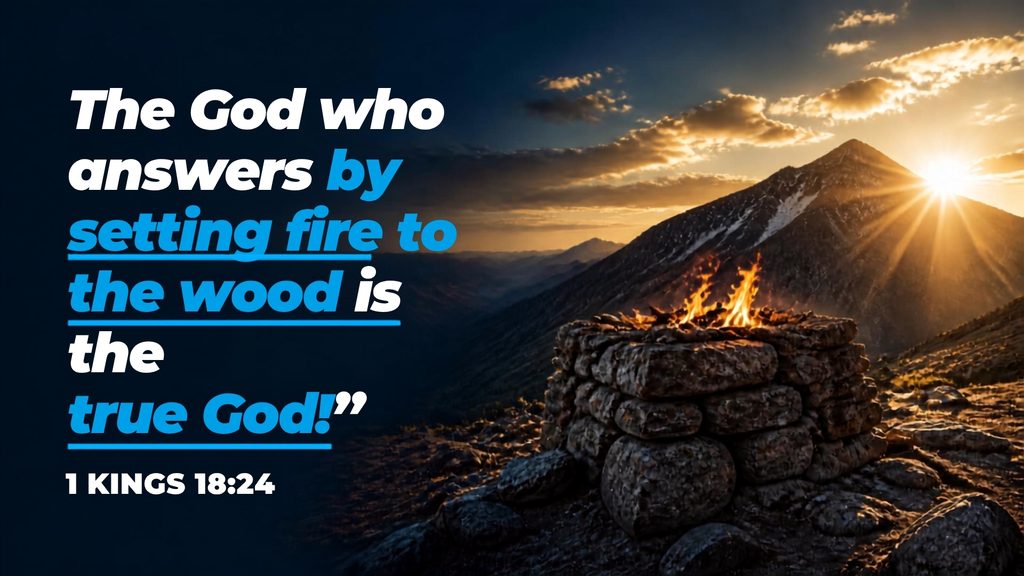
And the fire fell. Not a little. Not politely. It consumed the bull, the wood, the stones, the dust, even the water in the trench. Everything. And the people fell on their faces and cried out: “The Lord — He is God!”
The fire didn’t fall on a counterfeit. It fell on a restored altar where everything was on the wood and nothing was held back.
Takeaway
Whatever you’re holding back from God — that’s the very thing keeping the fire from falling. The altar can be repaired. But it requires everything. Not 90%. Not “most of it.” Everything. Pick up the stones. Heal what’s been broken. Place yourself on the altar. And trust the God who answers.
Prayer
Lord, I don’t want a counterfeit altar. Show me what’s been torn down in me — what neglect, what compromise, what slow erosion has dismantled. Heal it. Restore it. And help me hold nothing back. Everything goes on the altar today. I’m trusting You with what matters most. In Jesus’ name, amen.
